
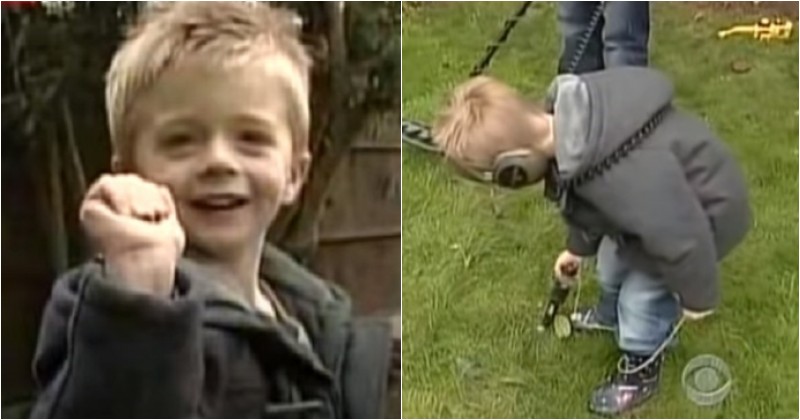

If there’s such a factor as “newbie’s luck,” then certainly 3-year-old James Hyatt has it. The little boy went metallic detecting for the primary time and located a buried treasure price $4 million {dollars}.
It’s each child’s dream to search out buried treasure, and that’s precisely what occurred to little James Hyatt one afternoon when his father took him metallic detecting for the primary time. Nonetheless, it wasn’t the primary time for James’ granddad who had been looking for 15 years.
“James bought a buzz after simply 5 minutes,” stated Jason Hyatt, who’s the daddy of the little boy. “We noticed a glint eight inches down and gently pulled the item out. Dad was blown away. He’d by no means discovered something prefer it in 15 years doing his interest. James was so excited to search out treasure, although he’s too younger to understand its significance.”

“It went beep beep beep,” little James recalled the occasion. His father began to dig. When he had dug to about 6 to eight inches, he struck gold, actually. “Then we dug into the mud. There was gold there. We didn’t have a map – solely pirates have treasure maps,” 3-year-old James defined to the media.
In response to The Guardian, James found a 500-year-old gold reliquary, fantastically engraved with the names of the Magi and pictures of Christ and Saint Helena. It might as soon as have been brilliantly coloured, with enamel work filling within the letters and ornament, and should as soon as have contained a relic of the cross. It most likely dropped from the neck of some rich and pious individual and lay undiscovered within the discipline for half a millennium.
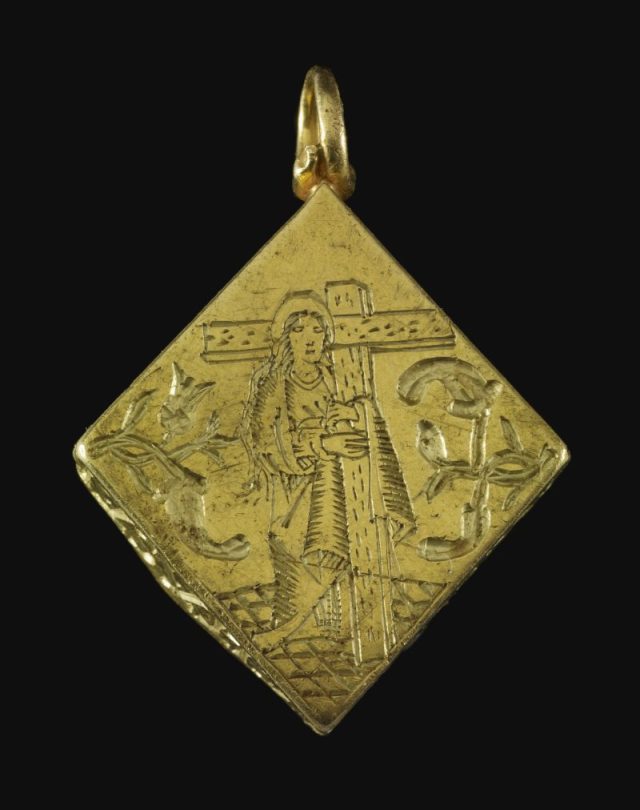
The little locket was jammed shut when discovered. After conservation work by Marilyn Hockey on the British Museum, the again panel slid open once more for the primary time in centuries – however there was nothing inside besides some fibers of flax, most likely as soon as grown domestically. A coroner’s inquest declared the discover a treasure, and it has a everlasting place within the British Museum’s medieval gallery.
In response to CBS, whereas the estimated price of the pendant was $4 million, the household obtained solely £70,000 for his or her discover. The cash was paid with grants from the Artwork Fund charity and the Associates of the Museum. The cash was to be shared between the Hyatts and the landowner.
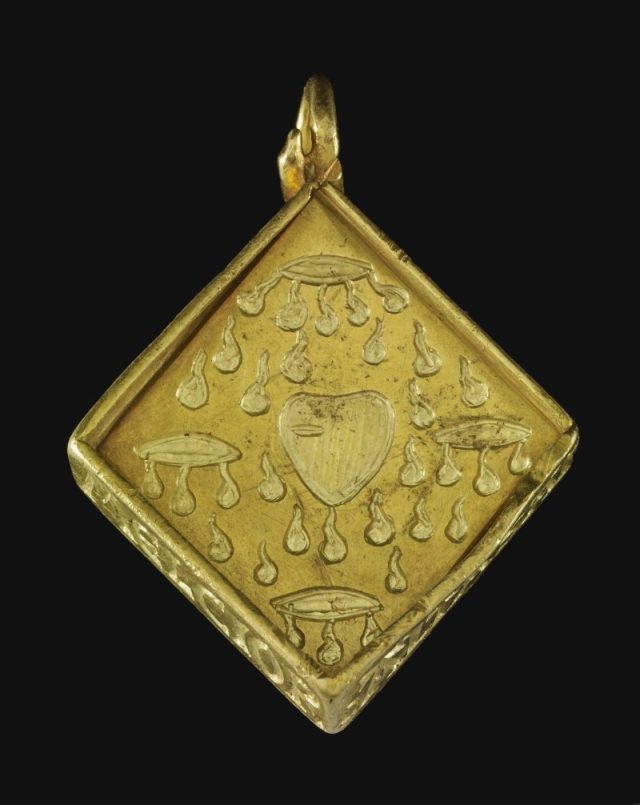
Given the imagery on the pendant, the contents have been most likely initially regarded as a chunk of the True Cross which Saint Helena discovered on her journey to the Holy Land from 326 to 328 A.D, in line with legend. Helena is commonly depicted holding the cross. On the again facet is a veritable bathe of blood droplets falling out of and over 4 incisions and a minimize coronary heart symbolizing the 5 wounds of Christ.
On three sides of the pendant are inscribed the names of the Three Smart Males — Iaspar (Caspar), Melcior (Melchiore), Baltasar (Balthazar) — in a stunning Lombardic script. The fourth facet has a floral tendril much like those on both facet of Helena.
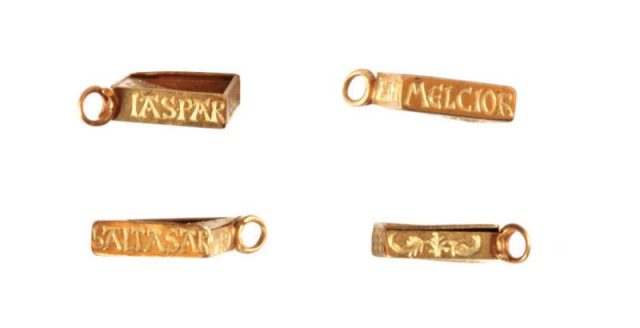
The pendant is 1 inch broad and 1.3 inches lengthy which makes its wealthy ornament much more uncommon and troublesome to supply. Specialists imagine the engravings have been seemingly enameled when the piece was new. That may have given the item a wealthy mixture of colours on prime of the valuable metallic, a well-liked model in late Medieval jewellery. Solely a really rich individual may have afforded to purchase such an costly image of their pious dedication to the blood and wounds of Christ.
The legend of Saint Helena is broadly accepted by archeologists and historians. Despite the fact that little James’ discovery didn’t maintain a chunk of the True Cross, the pendant was designed for a noblewoman to carry such a relic. In 327 AD, Helena’s son, Constantine, the primary Christian emperor of Rome, wrote to Macarius, the bishop of Jerusalem, ordering him to tear down the Temple of Venus that stood on the location of Calvary and the Holy Sepulcher and construct a basilica.
In response to historians, Helena traveled to the location to start excavating, which led to the restoration of three totally different crosses. Nonetheless, with nothing to tell apart the cross of Jesus from the crosses of the 2 thieves who have been crucified with him, Helena had a dying lady carried to the location so she may contact every cross in flip.
After touching one of many crosses, the sick lady was immediately healed, which was taken as an indication that it was the cross upon which Our Lord had died. For the Hyatt household to have found this pendant, which was designed to carry such a relic and is just one of 4 recognized, is certainly a uncommon discover.